
Most small businesses need three AI marketing tools, not thirty: one general AI assistant for writing and thinking, which costs about $20 a month, the AI features already built into software you pay for, and a specialist tool only for a job that eats hours every week. Choose by the job, not by the tool, check everything before a customer sees it, and keep customer data out of any chat that trains the company's models.
That is a shorter answer than the first page of Google gives. Of the eight tool guides I read there for this search, all eight are lists of named tools, from five to fifty of them, and none mentions the FTC or the Census Bureau's count of how many businesses use AI at all. This guide covers both, sorts the work by job, prices it, and shows what I use and what it costs me. It is not a product comparison: I name the tools I use and the ones I could price, because a list of fifty names is the problem it is trying to solve. Where a figure comes from a source, I link it with its date; where I give my opinion, I say so.
Do small businesses actually use AI for marketing?
Fewer than the tool lists suggest, and marketing is where they use it most. The best count is the US Census Bureau's 2025–2026 Business Trends and Outlook Survey, a nationally representative survey it runs every two weeks, which asks whether a business used AI in the past two weeks. As of May 3, 2026, 19.8% of US businesses said yes, and use had grown since December among firms with 20 or more employees but had not changed significantly among smaller ones (Census Bureau (opens in a new tab), May 2026).
Here is the Census Bureau's 2026 chart of that survey by firm size; the smallest firms are the flat lines at the bottom:
Among the businesses that do use AI, marketing is the most common job they give it. An October 2026 working paper by Census Bureau researchers, drawn from the same survey, found that 18% of firms used AI in a business function between November 2025 and January 2026, and most of those used it in three or fewer functions, "most commonly Sales and Marketing (52%)" (Census Bureau working paper CES 26-25R (opens in a new tab), October 2026).
The numbers
| Business function | Share of AI-using firms |
|---|---|
| Sales and marketing | 52% |
| Strategy and business development | 45% |
| Information technology | 41% |
My reading: if you run a business with a handful of people, most businesses your size are not using AI yet, so a little, used well, is still an edge. It does not take a stack of subscriptions to get it.
Which AI marketing tools does a small business need?
Think in three layers, and add a layer only when the one before it runs out.
- One general assistant. ChatGPT, Claude or Gemini. This is the tool that drafts, rewrites, summarizes, brainstorms, reads a spreadsheet and answers "what am I missing?". Pick one and learn it well; the differences between them matter less than how well you brief the one you use.
- The AI inside software you already pay for. Many email platforms, design tools, office suites and ad platforms have added AI features, some at no extra cost (examples below). Use those before buying a separate tool that does the same thing from outside.
- A specialist, only where it earns it. A paid tool for one job, when that job takes hours every week or needs data your assistant does not have.
Here is how I would split the usual marketing jobs:
| Job | Start with | Pay for a specialist when | Check before it goes out |
|---|---|---|---|
| Social posts, emails, web copy | Your general assistant | Several people write in your name every week and need one voice | Every fact, price and promise; that it sounds like you |
| Graphics and illustrations | The design tool you already use | You need one consistent style at volume | Invented lettering on signs and labels; real people's faces |
| Email campaigns | Your email platform's own AI | Rarely | Subject lines that promise more than the email gives |
| Review replies | Your assistant drafts, you post | Never automate it | That the reply answers this customer, not any customer |
| Keyword and competitor research | Your assistant with your own Search Console data | You want live search volumes and rivals' rankings | Numbers the assistant made up without data |
| Ads | The ad platform's own automated campaigns | You run several platforms and need one view | Budgets, and where the ads actually showed |
Two rows need a word more. Research is where a bare assistant misleads: ask it for search volumes and it will give precise-looking numbers it invented, which is why I connect mine to real data (more in my AI for SEO workflow). And review replies are worth doing well, because people read them; I cover what to say in my guide to Google Business Profile optimization.
What do AI marketing tools cost?
Less than the lists imply, if you stop at the first two layers.
As of November 2026: Claude Pro is $20 a month billed monthly, or $17 a month billed yearly (Anthropic (opens in a new tab)). Google AI Pro, which includes the Gemini app, is $19.99 a month (Google (opens in a new tab)). OpenAI sells ChatGPT on a similar ladder of free and paid plans; its pricing page loads its prices by script, so check them at chatgpt.com/pricing (opens in a new tab). Built-in AI often comes with a plan you already pay for: Mailchimp says its Intuit Assist feature "is available at no additional cost at this time" on certain Premium, Standard and Legacy plans (Mailchimp (opens in a new tab)), and Google Workspace's plans include Gemini in Gmail to "find, summarize, and write emails faster with AI" (Google Workspace (opens in a new tab)).
So a small business can cover most of its marketing writing for about $20 a month on top of what it already pays. A specialist adds its own price, which is usually more than the assistant; that is why it has to save real hours to be worth it.
What do I use, and what does it cost me?
I run a one-person studio, so my own setup is a fair test of the three layers. One assistant does most of the work: research, outlines, first drafts, and checking my drafts against the pages they have to beat. Two specialists earn their place, each for a job my assistant cannot do alone.
Search data. My assistant pulls keyword and competitor data from Ahrefs through Ahrefs' connector, so the numbers in a brief are Ahrefs' numbers, not guesses. The brief for this post took four calls and used 1,794 of my Ahrefs API units. Here is what the research for this post used from my Ahrefs plan.
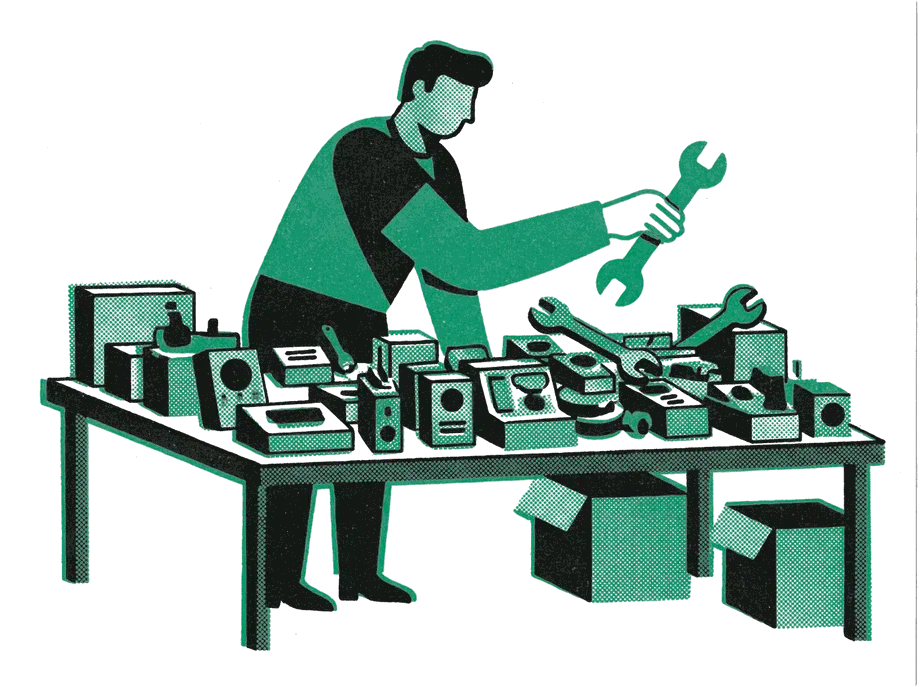
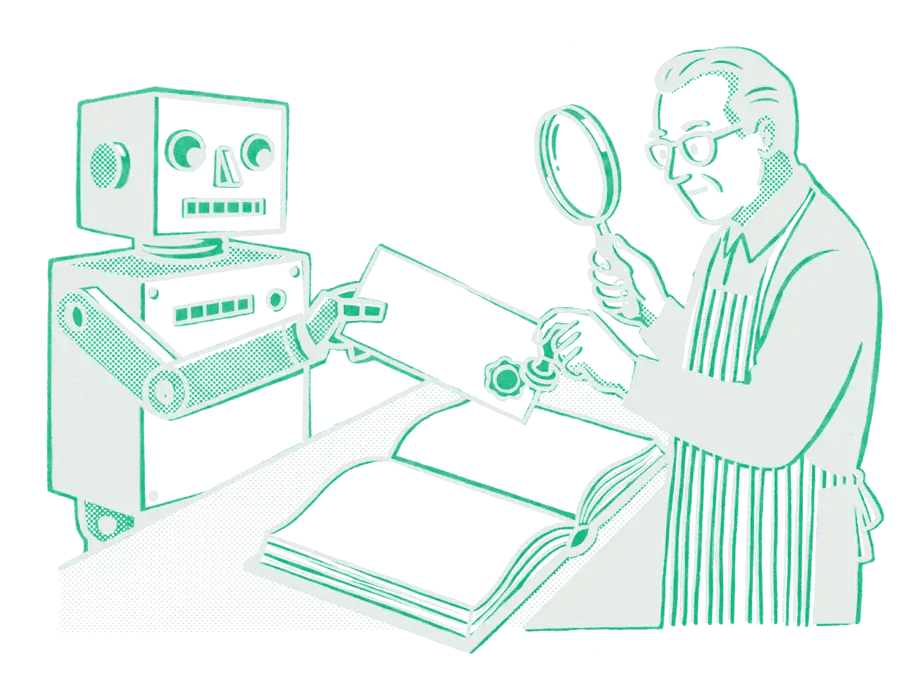
Illustrations. Every drawing on this blog, including the three in this post, comes from Higgsfield, an image generator I pay for on its Ultra plan: 3,000 credits a month, at $129 a month, billed monthly. The three drawings here took six generations, two of each, at 2 credits apiece: 12 credits, about 50 cents of my plan. I threw out three of the six. One came back as a photograph of an open book, one turned the scene into a crowded mess, and one stamped a letter onto a wax seal, which is the lettering the illustrations are never supposed to carry.
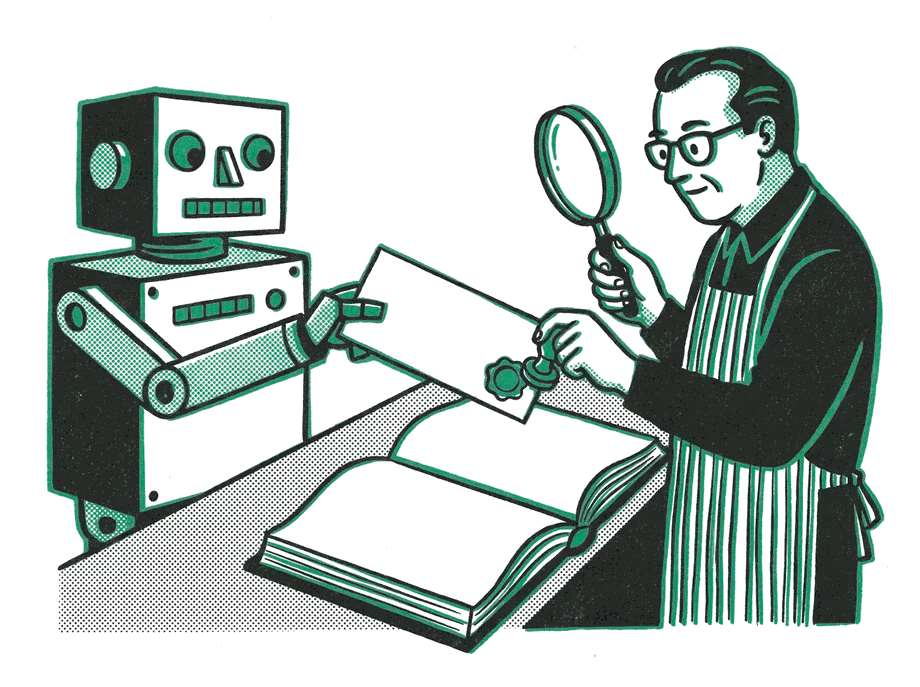
That last point is the real cost of AI tools, and it is not on any pricing page: the time it takes to check the output. My rule is that nothing an AI writes or draws goes out until I have read or looked at all of it. That rule takes time, and it is the reason the tools are worth having rather than a risk.
How do you choose an AI marketing tool?
Five questions, in this order:
- Does software I already pay for do this? Look in the settings of your email platform, your design tool and your office suite before you sign up for anything new.
- Does it train on what I type, and can I turn that off? On consumer plans this varies by company and by setting. Anthropic, for example, asks every Claude user to choose whether chats on Free, Pro and Max accounts can be used to train new models, and lets you change it any time (Anthropic (opens in a new tab)). Check the setting before you paste in customer names, sales figures or a client list.
- Can I get my work out? In my opinion, a tool that keeps your drafts, images or contacts where you cannot export them is renting you your own work.
- What does the free plan actually allow? Most of these tools have one. Use it on a real job for two weeks before paying.
- Who checks it before a customer sees it? Name the person. Google's own advice for AI-made content is blunt: "It is critical to manually factcheck and review all AI-generated content for accuracy and trustworthiness before publishing" (Google Search Central (opens in a new tab)).
What should you never hand to an AI marketing tool?
- Reviews and testimonials. The FTC's rule on consumer reviews makes it unlawful for a business to "write, create, or sell a consumer review" that misrepresents whether the reviewer exists or used the product (16 CFR 465.2 (opens in a new tab), published in 2024). An AI-written review from a customer who does not exist is exactly that.
- Pages by the hundred. Google's spam policies name "Using generative AI tools or other similar tools to generate many pages without adding value for users" as scaled content abuse (Google (opens in a new tab)). A page for every town you serve, written by AI and alike in all but the town's name, is the textbook case.
- Promises. Prices, guarantees, licenses, warranties and anything a customer could hold you to. An assistant will write a confident promise you never made; I read every one before it goes out.
- Your customers' private data on a training setting. See question 2 above.
AI can help you get found in AI answers, too, but that is a different job from making your marketing; I cover it in my guide to ChatGPT SEO.
The short version
Start with one AI assistant at about $20 a month and the AI already inside the software you pay for. Add a specialist only for a job that costs you hours every week or needs data the assistant does not have. Before anything goes to a customer, a person checks it. Never let AI write a review, mass-produce pages or make a promise for you, and keep customer data off any setting that trains a model. Most businesses your size are not using AI yet; a few tools, used carefully, are enough to be ahead of them.